Technological advantage thanks to the LocateRisk MCP interface
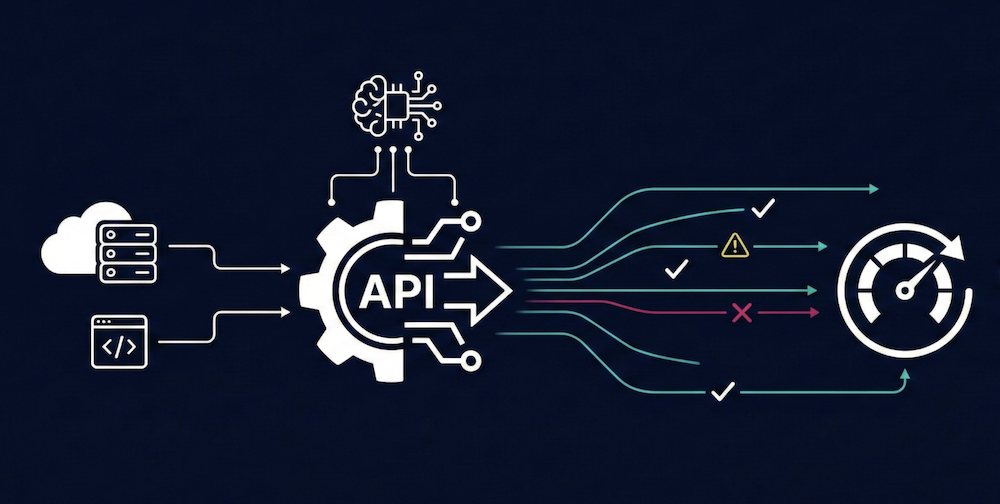
AI-native safety analysis The direct integration of security data into AI-supported workflows significantly accelerates the identification and elimination of vulnerabilities. LocateRisk provides an interface for this based on the Model Context Protocol (MCP) ready. As currently the only provider in the External Attack Surface Management (EASM) and Cyber Vendor Risk Management (C-VRM) LocateRisk thus enables direct machine-to-machine communication. The technology combines security analyses directly with artificial intelligence, making complex data available for automated decisions without any loss of time.
Seamlessly connect your own AI models - MCP makes LocateRisk part of your infrastructure Until now, connecting external security data to a company's own AI systems often involved a great deal of programming effort. The LocateRisk MCP interface fundamentally changes this: it acts as a universal standard that enables any company to connect its own AI model (such as an internal ChatGPT instance, Claude or local open source models) directly to the LocateRisk SaaS system. The concrete benefit: You no longer need to build complex API interfaces. Your AI „speaks“ natively with LocateRisk through the MCP. This allows you to retain full control over your data and use your familiar AI environment to perform high-precision EASM analyses and create automated reports.
Seamlessly integrate your own AI models - MCP makes LocateRisk part of your infrastructure.
The following case study shows how this is changing day-to-day work in IT security.
Case study: Efficient scan comparison using the LocateRisk MCP interface
The starting point for any robust scan comparison is a consistent assessment of the external attack surface. Our knowledge article describes how assets are identified, categorized, and prioritized for further analysis. Attack Surface Assessment.
Monitoring the external attack surface (EASM) requires continuous success monitoring. With the provision of an interface based on the Model Context Protocol (MCP) LocateRisk enables a direct, AI-supported evaluation of security changes.
Initial situation
An IT security analyst carries out the weekly security check. Their task is to precisely record the changes since the last scan: Have critical vulnerabilities been successfully resolved? Have new risks arisen due to new systems or configuration changes? Manually comparing hundreds of findings across different dashboards is time-consuming and prone to careless errors.
Solution with the LocateRisk MCP interface
The interface fully automates the process. It delivers results immediately as it massively reduces data volumes. Your AI only receives the information it really needs, which makes the analysis extremely fast.
Step 1: Retrieve scan history
The analyst communicates directly with the system via a simple control command: „Compare the last two scans from locaterisk.com.“ The system accesses a complete history of 67 scans and immediately identifies the two relevant data points:
New scan: January 19, 2026 (Score: 92.9)
Previous scan: December 29, 2025 (Score: 89.5)
Step 2: Automatic adjustment (Diff)
The MCP interface creates the complete comparison in less than 10 seconds. The analysis results in a Score improvement of 3.46 points in total. The breakdown by category shows the following picture:
Application: Improvement by 3.14 points. There were zero new findings and a corrected finding (critical Vuetify vulnerability with an impact of +3.22).
SSL: Improvement by 0.34 points. Here were six findings fixed, while three new findings were added.
Network: Improvement by 0.04 points. It was Fixed a Finding with zero new findings.
Web: Decrease by 0.04 points due to six new findings and zero resolved findings.
DDoS: Minimal change from -0.003 points through a new Finding.
DNS: Almost stable with a change of -0.007 points (zero new, zero resolved findings).
The newly identified findings with low impact in detail:
SSL Cipher Suite Issues: -0.19 points (at 3 locations)
Time to First Byte (DDoS): -0.002 points (at 1 location)
Result: All changes at a glance in seconds
The analyst receives immediate clarity: the targeted elimination of the Vuetify vulnerability has significantly increased security. New risks in the SSL and web areas were identified immediately and can now be prioritized. The infrastructure remains stable as no new hosts or shadow IT were discovered.
Time saving A comparison of this amount of data without the LocateRisk MCP interface usually requires four to six hours for viewing and documentation. With the automated solution, this effort is reduced to under 10 seconds. In addition, the system provides a complete analysis of the score impact per finding, which enables a precise risk assessment.
Compliance and digital sovereignty The automated workflow supports the requirements of the NIS-2 and the IT baseline protection to continuous risk management. As a „Made in Germany“ solution, it is operated in certified German and European data centers, which ensures compliance with the GDPR and protection from the US Cloud Act.
Technical FAQ: LocateRisk MCP interface & EU sovereignty
The LocateRisk MCP interface was designed for direct communication between security systems and artificial intelligence. It uses the Model Context Protocol, to prepare data natively for LLMs (Large Language Models). Through a Stateless architecture the data transmission remains stable even in the event of interruptions. In contrast to older methods, the responses in the Kilobyte range which minimizes the computing load and increases the processing speed.
AI models have a limited working memory for data, the so-called context window. Conventional interfaces often deliver unfiltered data volumes in the megabyte range that quickly fill this window. The LocateRisk MCP interface delivers highly compressed, structured data packages. This allows AI systems to process significantly more historical scans and in-depth detailed analyses simultaneously without losing relevant information due to memory limitations.
A comparison of two security scans, which includes hundreds of findings in categories such as SSL, Application and Network, typically takes an analyst four to six hours. This process is started via the LocateRisk MCP interface using the „Compare last two scans“ command on under 10 seconds reduced. The system immediately delivers the precise score impact for each individual finding.
For compliance with the NIS-2 Directive and European data protection standards, the location of data processing is crucial. LocateRisk exclusively uses certified data centers in Germany and the European Union. This ensures that all analyses remain within the European legal area and are fully subject to the GDPR are subject to. Thanks to this focus on digital sovereignty, the platform offers effective protection against access by the US Cloud Act, which is a necessary condition for cyber supply chain risk management (CSCRM) in regulated industries in particular.
Yes, the MCP interface allows you to programmatically combine the technical review of your own attack surface (EASM) and the evaluation of third-party providers (Vendor Risk Management). Users can access 639 Questionnaire templates which are compared with technical scan results. This speeds up the onboarding of suppliers and ensures continuous monitoring of the supply chain.
Request your personal Live-Demo now
Identify and reduce your cyber risks through a comparable and understandable overview of your IT security. Let our experts advise you and find out how LocateRisk can help you solve your cyber risks.
Want to find out more, book a demo or simply exchange ideas? We look forward to hearing from you!
We use cookies to optimize our website and our service.
Functional
Always active
Technical storage or access is strictly necessary for the lawful purpose of enabling the use of a particular service expressly requested by the subscriber or user, or for the sole purpose of carrying out the transmission of a message over an electronic communications network.
Preferences
The technical storage or access is necessary for the legitimate purpose of storing preferences that have not been requested by the subscriber or user.
Statistics
The technical storage or access, which is carried out exclusively for statistical purposes.Technical storage or access used solely for anonymous statistical purposes. Without a subpoena, the voluntary consent of your Internet service provider, or additional records from third parties, information stored or accessed for this purpose alone generally cannot be used to identify you.
Marketing
Technical storage or access is necessary to create user profiles, to send advertisements, or to track the user on a website or across multiple websites for similar marketing purposes.







 English
  Deutsch
  Français